Stages of In Vitro Fertilization (IVF) Treatment in Infertility

Infertility, commonly known as sterility, is a condition that couples who wish to have a baby may encounter for various reasons. Among the available treatment options, in vitro fertilization (IVF) is one of the most commonly preferred methods by couples. In this article, we will examine the stages of IVF treatment in a detailed and professional manner.
Stages of IVF Treatment in Infertility
1. Initial Examination and Evaluation
The first stage of IVF treatment involves a comprehensive evaluation of the couple. During this stage:
-
The couple’s medical history is reviewed.
-
Previous treatments, pregnancy history, miscarriages, and premature births are evaluated.
-
Results of previously conducted medical tests are examined.
-
Blood samples are taken from both the woman and the man.
-
The woman’s ovarian reserve is assessed through ultrasonography.
-
A semen analysis (spermiogram) is performed for the male partner.
-
The uterine lining and the shape of the uterus are evaluated.
-
When necessary, advanced tests such as genetic analyses and clotting disorder tests (thrombophilia panel) are performed.
Based on these evaluations, the most suitable treatment plan for the couple is created and IVF treatment is initiated.
2. Ovarian Stimulation (Ovulation Induction)
The initial phase of the treatment process, known as ovulation induction or controlled ovarian hyperstimulation (COH), involves administering hormonal medications through daily injections to stimulate the ovaries to produce multiple eggs.
This stage:
-
Is individualized according to the woman’s age and ovarian reserve.
-
Includes medication types and doses specifically tailored to the patient.
-
Uses antagonist injections to prevent premature ovulation.
Egg development usually lasts between 7 and 12 days, during which the process is regularly monitored through ultrasound and blood tests.
3. Egg Retrieval (Oocyte Pick-Up – OPU)
Egg retrieval is performed under anesthesia (sedation/analgesia) using ultrasound guidance through the vaginal route.
During this procedure:
-
A thin needle is inserted into the ovaries to aspirate the fluid inside the follicles (egg sacs).
-
The collected eggs are placed in tubes and prepared for fertilization in the laboratory.
-
At the same stage, a sperm sample is collected from the male partner.
For sperm collection, the male partner is usually advised to maintain sexual abstinence for 2 to 4 days beforehand.
4. Fertilization with the Microinjection Method (ICSI)
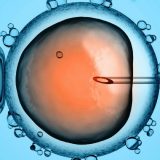
The collected eggs are fertilized in the laboratory on the same day using sperm obtained from the male partner through the Intracytoplasmic Sperm Injection (ICSI) technique.
ICSI involves:
-
Injecting a single sperm cell directly into each egg cell under a microscope.
-
The fertilized eggs (embryos) are then cultured in the laboratory for 3 to 5 days to allow development.
5. Embryo Transfer to the Mother
Embryo transfer is one of the final stages of IVF treatment and involves placing the fertilized embryos into the uterus.
During this stage:
-
Embryos from day 3 or day 5 are selected depending on their development.
-
The selected embryos are transferred into the uterus using a thin catheter in a painless procedure.
6. Pregnancy Test and Follow-Up
After embryo transfer, a pregnancy test is performed.
-
If a day-3 embryo is transferred, the pregnancy test is performed 12 days later.
-
If a day-5 embryo is transferred, the pregnancy test is performed 10 days later.
If the test result is positive, the pregnancy is monitored through ultrasound and blood tests to ensure it progresses healthily. If the result is negative, a new treatment plan is developed.
For a healthy pregnancy and successful birth, accurate diagnosis of infertility and the creation of an appropriate treatment plan are essential. IVF treatment should be personalized and carefully conducted by an experienced medical team.
NOVAART IVF Center in Ankara provides personalized treatment methods guided by experienced IVF specialists, using the most up-to-date scientific information for couples experiencing infertility.
If you would like to learn more about IVF treatment or start the treatment process, you can take the first step by consulting a specialist.
IVF Success Rate in Male Infertility
Male infertility accounts for approximately half of the difficulties couples experience when trying to conceive.
Male infertility is characterized by:
-
Low sperm count
-
Poor sperm quality
-
Insufficient sperm motility
In such cases, IVF treatment offers an important solution for couples.
The success rate of IVF in male infertility depends on several factors:
1. Sperm Quality and Count
Low Sperm Count:
Through the ICSI technique, even men with very low sperm counts can successfully fertilize eggs.
Sperm Quality:
Higher sperm quality increases the chances of fertilization and healthy embryo development.
2. Woman’s Age and Health
Woman’s Age:
A woman’s age directly affects embryo quality and implantation rates. Younger women generally have higher pregnancy success rates.
General Health:
The overall health of the woman plays an important role in the treatment process. A healthy uterine environment increases the chance of embryo implantation.
3. Medical and Technical Factors
Treatment Center and Expertise:
The equipment of the fertility clinic and the experience of the physicians significantly influence IVF success rates.
Treatment Method:
The techniques and technological infrastructure used during treatment may increase success rates.
Overall, the success rate of IVF treatment in male infertility ranges between 40% and 50%, depending on these factors.
IVF Success in Unexplained Infertility
Unexplained infertility refers to cases where couples are unable to achieve pregnancy after one year of regular, unprotected intercourse, despite medical tests showing no identifiable problem.
In such cases, IVF treatment provides a promising solution.
The success rates of IVF in unexplained infertility depend on the following factors:
1. Woman’s Age
Younger Women:
Women under 35 years of age tend to have higher success rates in IVF treatment. Success rates in this group can reach up to 50%.
Advanced Age:
For women over 35, success rates gradually decline with age and may range between 20% and 30%.
2. General Health Status
Healthy Lifestyle:
Adopting a healthy lifestyle can increase the success rate of IVF treatment. Balanced nutrition, regular exercise, and avoiding harmful habits such as smoking and alcohol are important.
Medical History:
The couple’s medical history and previous treatment experiences may influence success rates.
3. Treatment Center and Expertise
Experienced Specialists:
IVF treatments performed by experienced medical teams significantly increase the chances of success.
Advanced Technology:
Clinics equipped with modern technologies and up-to-date scientific practices achieve better outcomes.
Overall, the success rate of IVF treatment in unexplained infertility ranges between 30% and 50%.
IVF Treatment in Secondary Infertility
IVF treatment offers an effective solution for couples experiencing secondary infertility.
The stages of IVF treatment in such cases include:
1. Evaluation and Planning
-
The couple’s medical history and previous pregnancy experiences are thoroughly reviewed.
-
Hormonal tests, ultrasound examinations, and semen analyses are performed.
2. Ovarian Stimulation
-
Hormonal medications are administered to stimulate the ovaries.
-
Egg development is monitored with ultrasound and blood tests.
3. Egg Retrieval (OPU)
-
Eggs are collected under anesthesia with ultrasound guidance.
4. Fertilization and Embryo Development
-
Fertilization is achieved using the ICSI technique, and embryos develop in the laboratory.
5. Embryo Transfer
-
Developed embryos are transferred into the uterus.
6. Pregnancy Test and Follow-Up
-
After embryo transfer, a pregnancy test is conducted, and if positive, the pregnancy is closely monitored.
Success Rates of IVF Treatment in Secondary Infertility
The success rates of IVF treatment in couples with secondary infertility are generally higher than those in primary infertility.
Success rates depend on factors such as:
-
The woman’s age and ovarian reserve
-
Sperm quality of the male partner
-
The equipment and expertise of the treatment center
-
The treatment techniques used
Overall, IVF success rates in secondary infertility range between 40% and 60%.
For more information and to contact our specialists, you can visit the NovaArt website.